
Detroit Criminal History Checks
A Detroit record check should open with a custody question, not an assumed department name. Use the official Detroit contact route to describe the date, location, and event. Ask whether a Detroit municipal officer, the Red River County Sheriff, Texas DPS, or another agency made the report or arrest. The answer controls where the incident narrative resides. Detroit City Hall can also route questions about a fine-only municipal matter.
- Contact Detroit and identify the law-enforcement agency responsible for the incident date and location.
- Send the records request to that confirmed custodian with a precise report description.
- Ask Detroit Municipal Court about a city citation only if the city confirms the matter was filed there.
- Check Red River County Jail for custody and the appropriate Clarksville clerk for a Class A, Class B, or felony case.
- Use Texas DPS for qualifying statewide public outcomes or fingerprint personal review of your own record.
This chain is necessary because no one Detroit interface combines an incident report, booking, court disposition, and DPS history.
Identify Who Policed Detroit
The research does not confirm that a standalone Detroit Police Department was the custodian for every incident or even that staffing stayed the same across all dates. Do not direct a request to “Detroit Police” based only on the Detroit name. Give Detroit's official contact channel the incident date, place, and record sought, then ask for the agency that responded and the Detroit-area office that keeps the report.
The official City of Detroit website is the documented local starting point.

That first Detroit check can prevent a request from being sent to a noncustodian. If the sheriff handled the Detroit event, the sheriff should receive the report request. If DPS handled a highway event, use the DPS public-information channel.
Records at the Detroit Police Department
No official Detroit police-records portal or dedicated request form was located. The heading describes a possible Detroit record category, not proof that a particular Detroit department made the event record. Begin with Detroit's Contact Us function and ask whether law enforcement was municipal, contracted, or sheriff-assisted on the relevant date. Only then address the request to the confirmed keeper.
| Detroit inquiry field | What to state or ask |
|---|---|
| Requester | Contact details for a response |
| Incident | Date, location, desired report, and known names |
| Custodian | Ask which agency handled the event and keeps the report |
| Delivery | Request the available inspection or copy method |
A focused Detroit inquiry should include requester contact, incident date and location, the desired report type, a case number when known, involved names needed to locate the record, and a delivery preference. Ask the city to identify the custodian if it does not hold the file. A request may seek an offense report, arrest report, crash report, dispatch record, or body-camera material, but each type can have different exceptions and required detail.
Note: No official Detroit police app was found, so a similarly named mobile app should not be used as a city record source.
Detroit Facilities and Record Contact
Detroit publishes a city facilities and directions page, yet the research did not verify it as a criminal-record counter or confirm a police records address. Use that Detroit page to identify and contact the correct public office rather than treating any listed building as the automatic custodian. Confirm the submission method, inspection place, and current hours before travel.
The Detroit locations and directions page is the official facilities source.
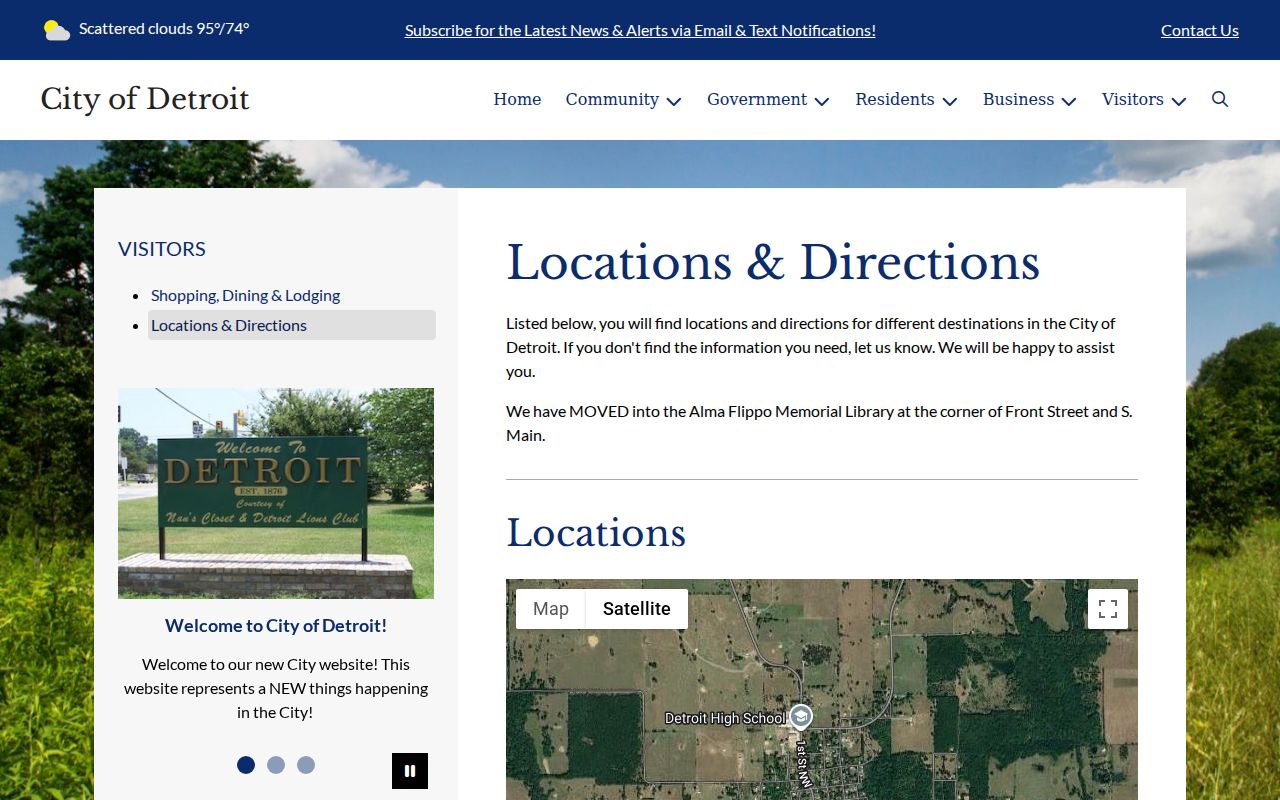
The image supports the Detroit contact route, not an invented claim about a permanent Detroit police desk. The safest request asks Detroit where the responsible agency keeps that specific incident file.
Booking and Arrest Records in Detroit
No Detroit city jail was located in official sources. If an arrest led to local detention, check the Red River County Jail listing and call 903-427-3838 for confirmation. The sheriff-linked roster is for current custody, not a full Detroit arrest archive. A missing person may have been released, transferred, booked elsewhere, or never booked. Older booking material belongs with the sheriff, while the arresting agency holds its own incident narrative.
The agency question remains vital. A sheriff arrest in Detroit produces a sheriff report, not a Detroit city police report. A DPS highway arrest uses the DPS request route. The county jail can confirm custody but should not be asked to supply an officer report created by someone else. For the full county channel sequence, use the Red River County arrest search.
Detroit Agendas Are Not Case Records
Detroit posts City Council agendas and public documents online. That archive is useful for city governance, but it is not a criminal case search, police blotter, jail list, or municipal docket. A reader should not search a meeting agenda for an individual's Detroit arrest or citation. The public archive instead shows how the city distributes official notices and keeps government material online.
The Detroit agenda archive demonstrates that distinction.
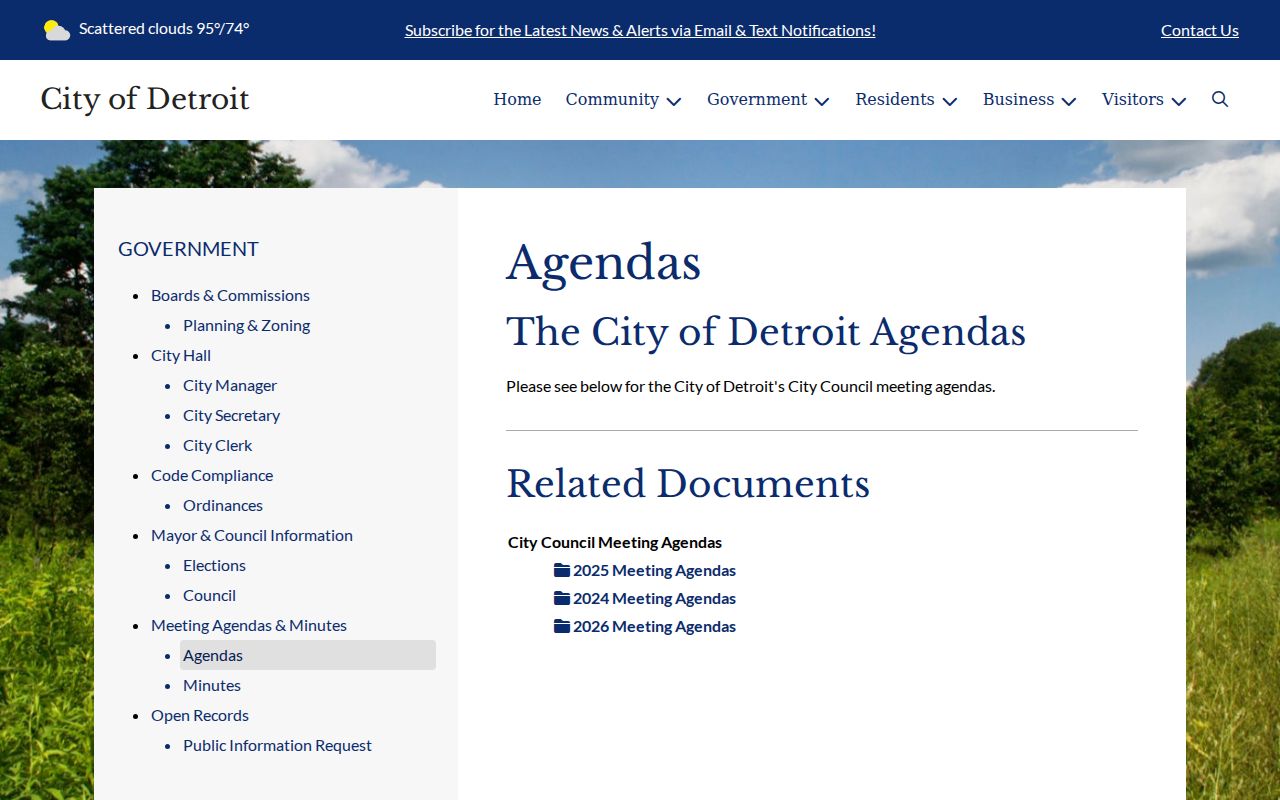
When the desired item is a police report or court file, use the contact, custody, and clerk chain instead of the agenda list.
The Detroit Municipal Court File
Fine-only city matters, if filed in Detroit Municipal Court, remain with that clerk. No searchable municipal interface was verified. Contact the city and ask whether a citation was filed locally, who serves as the clerk, and how to inspect the docket or request a copy. Give a citation number, case number, name, and date when available. Ask separately about warrant status because a public records request is not always a live warrant confirmation.
| Court Name | Detroit Municipal Court, when a city matter is filed there |
|---|---|
| Case Types Heard | City ordinance, traffic, and other fine-only Class C matters |
| Case Lookup Channel | Confirm the clerk and access method through the official city contact; no verified online search was found |
| What the File May Show | Citation or case number, filed allegation, docket events, plea, judgment, fine, costs, and public warrant status |
| Copies and Fees | Confirm current inspection, copy, and payment terms with the city court |
A Class A or B misdemeanor moves to the Red River County Court and County Clerk. Felonies move to a district court and the District Clerk in Clarksville.
Detroit City File or County Case
The filed level separates a Detroit city file from a county case. Municipal and justice courts handle fine-only matters. The constitutional County Court handles Class A and B misdemeanors, while the 6th and 102nd District Courts handle felonies. The arresting label can change after prosecutor review, so do not choose a clerk solely from the first booking charge.
| Detroit record | Likely custodian | Confirm with |
|---|---|---|
| Incident or arrest report | Agency confirmed through Detroit contact | Date, location, responding agency, report number |
| Fine-only city case | Detroit Municipal Court if filed there | Citation, case number, clerk |
| Class A or B misdemeanor | Red River County Clerk | Filed case number, name, year |
| Felony | Red River County District Clerk | 6th or 102nd District Court file |
The Red River County court case lookup provides the clerk path once a Detroit event becomes a county prosecution.
How Detroit Records Reach the County
The confirmed arresting agency creates the incident and arrest record. County jail staff create a booking if the person is received at the Red River County Jail. A prosecutor reviews the allegation and chooses whether and what to file. The municipal clerk keeps a qualifying city matter, the County Clerk keeps filed Class A and B misdemeanor cases, and the District Clerk keeps felony cases. Qualifying dispositions later move through the Texas reporting system to DPS.
Record flow: Detroit-area responding agency › Red River County Jail and Courts › Texas Department of Public Safety
This wording is deliberate. The research does not support naming Detroit Police Department as the actor for every Detroit incident. The first arrow must be filled with the agency that actually responded.
Use Detroit Crime Counts Carefully
Detroit crime statistics require a verified reporting agency and a named year. If DPS or FBI data do not show a separate Detroit reporting ORI for that year, sheriff totals cannot be relabeled as Detroit city crime. The sheriff covers a wider area and a different population. A county number may describe Red River County activity, but it is not automatically a Detroit rate or Detroit police count.
This rule also protects record searches. An agency table can help identify who reported an event, yet it does not prove that every event within Detroit had the same custodian. Use the incident location and date, then confirm the responding agency through the city or sheriff.
Detroit Alerts and Public Notices
Detroit offers email or text alerts tied to city notices. Those updates can help residents follow city business, closures, agendas, and public information. They are not a criminal-record notification service, jail alert, or police-report database. For custody notifications, use the official Texas VINELink channel after confirming the relevant person and custody system.
The city alert feature still matters for access. It shows that Detroit has expanded how it distributes public notices, while criminal records remain dependent on direct contact and the right external custodian. Do not infer a hidden Detroit criminal search tool from a general alert subscription.
Detroit Records and Federal Cases
A federal prosecution connected to Detroit is outside the city and county clerk systems. Red River County is in the Eastern District of Texas. Federal criminal filings are searched through PACER, and federal prosecution information comes from the U.S. Attorney. This is a limited route for a known federal matter, not a fallback whenever a Detroit local search fails.
The U.S. Attorney for the Eastern District of Texas is the official prosecution source assigned in the image manifest.
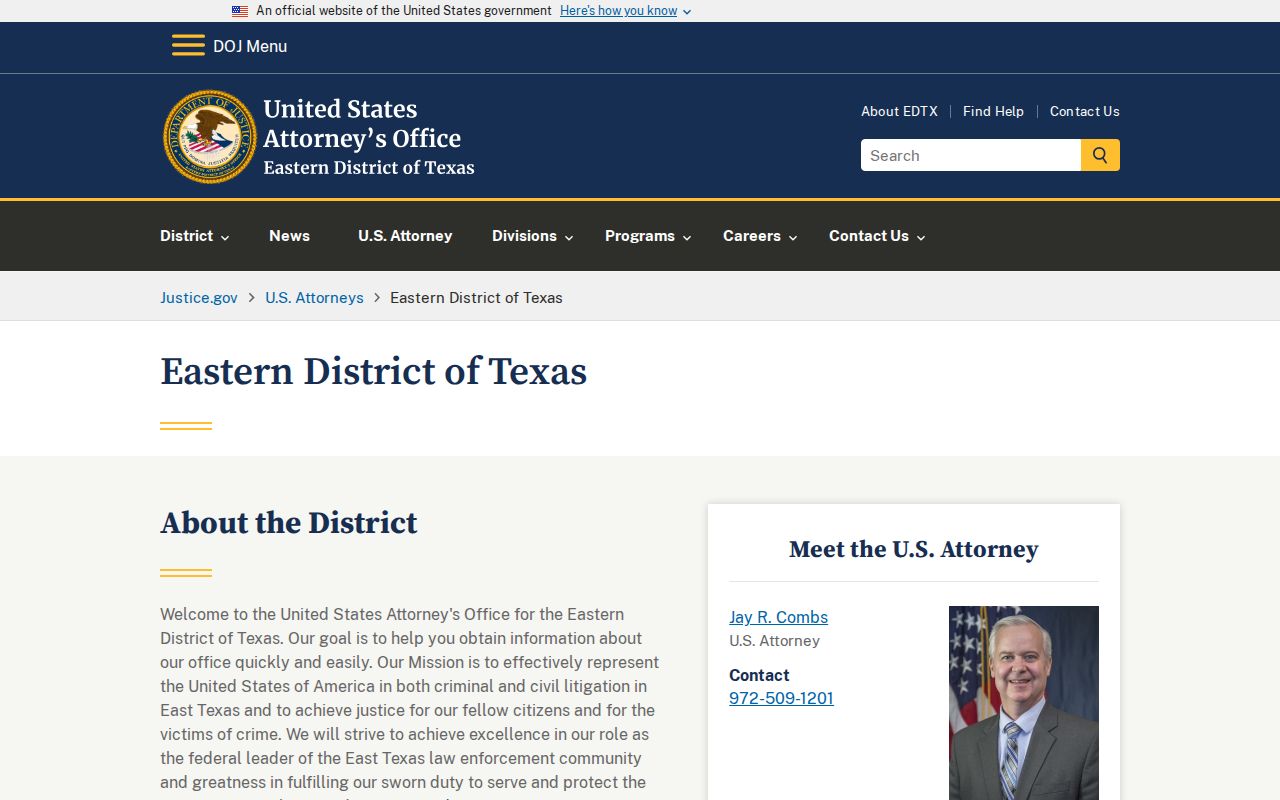
The federal caption controls. A Detroit city request, county jail check, and federal docket search answer different questions and should not be blended.
Detroit Record Access Rules
The Texas Public Information Act applies to nonexempt Detroit government information, but the first task is still identifying which government body holds the requested record. The Act does not turn the city into custodian of a sheriff or DPS report. Confidential juvenile, victim, medical, expunged, nondisclosed, and sealed data remain protected. Active investigative material can also fall within a law-enforcement exception.
Key Statutes:
Texas Government Code Chapter 552 sets access and production rules for nonexempt public records.
Texas Government Code § 411.135 authorizes DPS public access to qualifying conviction and deferred-adjudication information.
Texas Code of Criminal Procedure Chapter 55A governs court-ordered expunction of eligible arrest records.
Court files follow judicial access rules and the correct clerk's process. A dismissal is not the same as expunction, and it does not itself remove every Detroit-area report or booking.
Confirm the Detroit Record Custodian
Preserve the incident date, location, agency name, report number, booking number, and court case number as each becomes available. These details let Detroit route a request and help the sheriff or clerk locate its own layer. If two sources disagree, ask the office that owns the disputed entry about correction rather than asking City Hall to alter an outside record.
For your own statewide history, fingerprint personal review through Texas DPS is the identity-matched route. The public DPS name search is narrower and can miss a fresh or unreported Detroit-area event. A “no matching records” result does not establish that no incident, citation, or local booking ever occurred.